Meet the Crew - Lenya de Brouwer
Get to know your VHP4Safety colleagues better in our Meet the Crew!
Lenya is a PhD researcher working on in vitro models and data within VHP4Safety. In this interview, she talks about her route into cell research, her work on kidney models, and how her research contributes to the Virtual Human Platform.
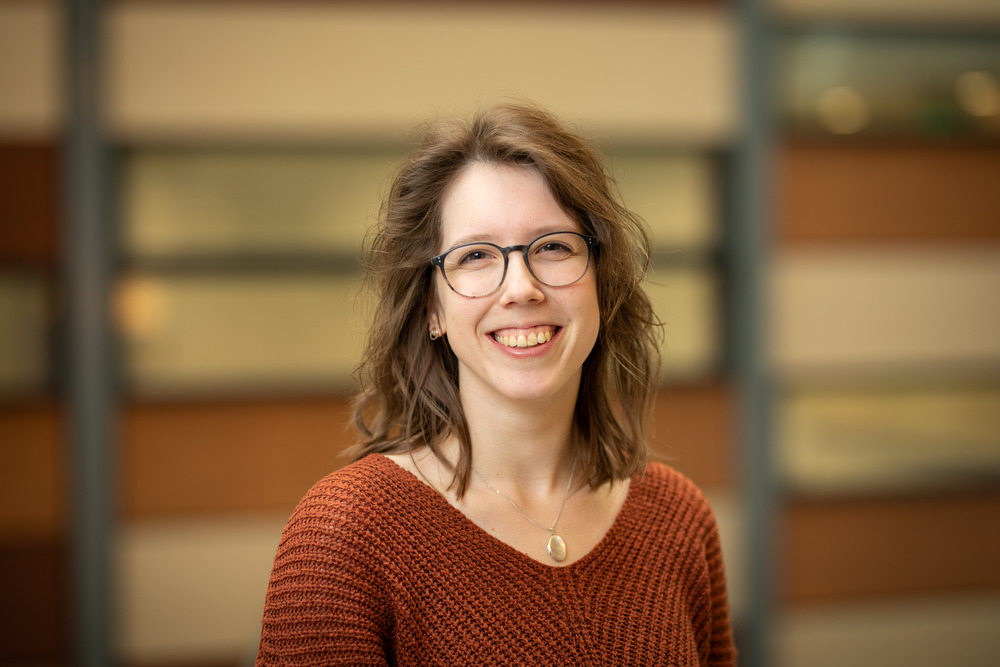
Hi Lenya! Could you tell us a little about your background?
Lenya studied Biomedical Sciences at Maastricht University, completing both her BSc and MSc there. During her master’s, she specialised in genetics and genomics and spent a year at the University of St Andrews in Scotland for an internship.
“That was where I worked with cells for the first time. Because of the COVID-19 pandemic, I had not had the opportunity to work with cells earlier in my studies.”
During the internship, Lenya worked with cancer cells and became fascinated by the effects of different substances on living cells. This experience motivated her to look for a PhD with a strong focus on cell research.
“That was when I came across the VHP4Safety PhD position. It sounded very interesting, especially because I would be working with stem cells. I also really liked the toxicology aspect.”
You work in work packages 2.1 and 2.2. What do you do there?
Lenya’s work includes research on several compounds. She has tested tacrolimus and various pesticides, like dinoseb and rotenone, in kidney models. She has also studied ifosfamide in kidney and liver co-culture models together with the RiskHunt3R project.
“In work package 2.1 we focus on toxicokinetics. Together with other partners, I look at cellular uptake and transport of specific compounds. In work package 2.2, I mainly look at what happens inside a cell after treatment with specific compounds and how these processes can lead to adverse outcomes.”
How do co-culture models improve kidney research?
Lenya is investigating whether stem cell-derived kidney models perform differently when different cell types are combined in a co-culture.
“Essentially, we want to know if co-culture can further improve these models so they can predict toxicological responses more accurately. We want to answer questions like: does inter-cellular cross talk occur within these co-cultures and how does that influence both cell types?”
Her research combines proximal tubular-like (PTL) cells with liver cells, and PTL cells with endothelial cells, which represent organ and cell systems that interact in the human body. “The results so far suggest that co-culture can lead to different responses than cells studied on their own, which is really interesting!”
The team is also exploring organ-on-a-chip models to investigate whether they can provide a good representation of the in vivo situation.
How is your work connected to the Virtual Human Platform?
“Our work generates data that other people can use through the platform. Making in vitro data publicly available is important.”
Lenya explains that the bigger datasets and compound data are relatively straightforward to add to the platform. The models like co-cultures and organ-on-a-chip, however, may be less straightforward. “Even so, it is very useful to have a place where these different types of data can be made accessible.”
How do you think in vitro researchers could use the VHP?
Lenya also considers this question from the perspective of someone who is unfamiliar with the platform.
“I always try to think about what I would find useful if I did not know about the VHP. I think it is valuable to have a place where different methods and datasets are collected in one location.
“For example, the methods could help researchers design their experiments by showing how other researchers have approached similar questions. I also think the platform could be useful next to publications by making raw data easily accessible. Negative data are not often shared in publications, so this is another area where the platform could add value.”
What was it like working in such an interdisciplinary project?
“One of the things I really enjoyed about this project was working with people from many different backgrounds towards one shared goal. Within the in vitro research line, we regularly discussed our data, but the contact with researchers from other disciplines was also very valuable. You can learn a great deal from other people’s expertise.”
Lenya particularly appreciated the hackathons and designathons. They helped her remember that she was part of a much larger group of people. She also valued the close contact with the platform developers. “They were genuinely interested in finding out how they could make the platform as user-friendly as possible for a wide variety of people.”
These interactions helped Lenya see that her work contributed to something beyond individual research papers. “When I presented the results of my research, I could see that they were actually being used elsewhere in the project besides publications.”
Jente, VHP4Safety’s data steward, also played an important role in helping Lenya bring her work into the platform. “It was really helpful to have someone in the project who could support this process.”
What would you say to others who are considering doing a PhD?
“If you think it might be right for you and you are naturally curious, you should definitely give it a go, I would say. You learn a lot and meet many interesting people! But if you feel it is not right for you, you should not force yourself to do it, of course.
“I also think it is important to remain curious about what is happening outside your own niche during your PhD. That is why I enjoyed working in this project with people from many different disciplinary backgrounds.”
Finally, what do you enjoy doing in your free time?
Lenya enjoys music and plays the drums in a band. She also likes going to concerts, kickboxing and cooking. “I also enjoy being creative. My latest creation was a small painting.”