Meet the Crew – Gerard van Westen
Get to know your VHP4Safety colleagues better in our monthly Meet the Crew!
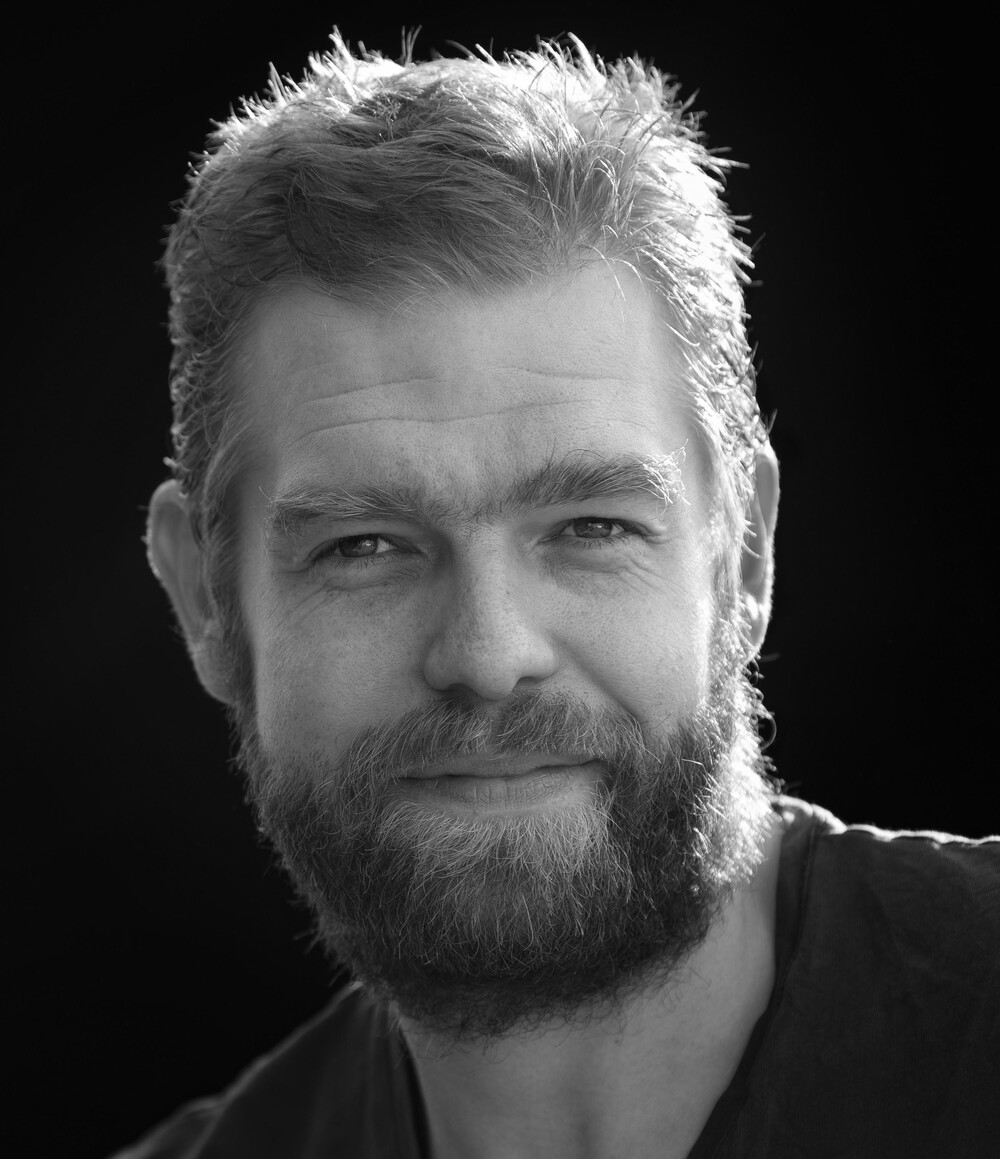
Gerard leads a research group in the field of Computational Drug Discovery at Leiden University, where he started his academic career studying Biopharmaceutical Sciences. Gerard did an internship at Janssen Pharmaceuticals, followed by a PhD in proteochemometric modeling. Before returning to Leiden, he moved to Cambridge with his family for a post doc at the European Bioinformatics Institute.
What's your area of expertise?
My focus is on Artificial Intelligence and Medicinal Chemistry, so the small molecule is the center of my attention. We try to predict the properties of these molecules: would it bind to a target of interest, would it inhibit something, would it be toxic? We also use these methods to generate new chemical structures that may be of interest. Based on the knowledge of existing drugs, we can predict whether a new structure will have the properties we're looking for: so it will bind, it will inhibit, and it will not be toxic.
My background is much more in a wet lab setting, but I found that the work could be slow going and the chances of positive results were uncertain. Hence, I made the switch to computational drug discovery. What I truly value in my current role is that I have the freedom to pursue blue skies research or curiosity-driven science. A large part of the studies that I have done in the past few years came from curiosity: let's just try it and see if this works. I realize it's a real luxury to be able to do that.
What’s your role in the project?
I am mostly involved in Research Line 1. Linde Schoenmaker, our PhD student, is specifically involved in Work Package 1.3. I'm also part of Work Package 1.1, working on the infrastructure.
We're using machine learning to predict molecular properties. The idea is that based on the structure and using all the knowledge that is out there, we can predict the spectra of potential interactions. That information can be used as input for other researchers who for instance look at a signaling cascade or look at a cellular mechanism or pathway. In this way we can combine the biological effect with the molecule that goes into it.
We published a paper a few years ago on the cannabinoid system, where we combined my modeling of interactions with pharmacodynamics/pharmacokinetics modeling that dictated how these compounds distributed through the brain. We wanted to see if we could capture a difference in how delta-THC and a number of other cannabinoid receptor binding compounds occupy the different relevant proteins. Because we knew what delta-THC does, but one of the other compounds led to severe depression and even suicides. This was strange, because just looking at the structures and the binding on the primary target, we would not directly expect that. But by combining these techniques we could actually see the differences: we could see different proteins being differently occupied. We could not make the hard link explaining why we see this particular behavior, but what we did learn is that we can capture these mechanisms. And this is something that I hope the virtual human can confirm as well, but then for the kidney and in other broader areas.
As for my work on the infrastructure: Egon Willighagen and Chris Evelo from Maastricht University are the ones mastering the theory behind what we need in the infrastructure, and I'm just there to see: can it do what we need it to do?
Why is the project of interest for you personally? Why did you join the project?
This is actually quite a personal story. During my internship at Janssen a few years ago, we took the first steps in multi-target (proteochemometric) modeling. We realized that if we look not only at the chemistry, but also at the proteins and the way that they vary, we can make much better models and we can get a better understanding of how an interaction takes place. Back then we were building these castles in the sky, saying ‘How great would it be if we could extend that to all proteins in the human body and create some sort of virtual human that we can use to predict the behavior of medication, without having to test it?’ So when I learned that this is the goal of this project, I knew I had to be part of it. And here we are!
When is the project a success for you?
I would be really happy if we are able to show proof of concept linking these multiple methods into a coherent overview of the toxicity mechanism for one of these applications, for example the kidney, and if we have been able to show that this also holds for things that were not tested yet, such as untested chemicals or chemicals that we know have a certain toxicity mechanism that are therefore left out of the in vivo study. Even if it's small scale and even if it's only for one application, I would be very happy because that would mean that we got all our noses in the same direction.
It will also be a success if we overcome the compounding errors that will likely occur because we are combining multiple modeling techniques. If my modeling technique has some errors, and the follow-up modeling technique has some errors, these errors will get bigger and bigger. Will you have enough signal, or are your errors such that while the theory works, you do not get a useful prediction?
It is quite a complex project that we are part of all together, and we are going to encounter quite a lot of problems in this process, for sure. But if you don’t dive into it, you'll never know where the problems are. So we start with a number of concrete defined cases – because we know something about them - but we still have to see how far we can get, which parts will be easier and which will be harder than we expected.
What was your main takeaway from the Designathon?
The main takeaway, first and foremost, is the motivation of people to make something out of this project. This is something that strikes me every time. Not only the PhD students, but also the more senior PI's, everybody is willing to work and build together.
Another takeaway is that with such divergent expertise it is quite difficult to steer the process and to define concrete tasks and concrete programs to work on. What I did like though is that people don't feel like there's no room to speak up. I was a bit worried that some of the example toxic compounds are not necessarily molecular, so they have working mechanisms that my group would not be able to work easily with, meaning we could also not easily apply it to new or other drugs. So that is something I would like to keep my eye on. But we have five more years, so lots of time to talk about this.
I think overall, the Designathon was a very successful meeting, but for the next one I really hope to be able to get together in real life though!
About that, corona restrictions are lifting in the Netherlands. What’s the thing you missed most or are most eager to do again?
In my private life, meeting with my parents and grandparents is something that I have been avoiding for a long time. My kids managed to each get the virus one at a time, so we were in quarantine for about a month. That was a challenging time, but with some creativity, we got through it.
Work-related, I cannot wait to have people get together and do actual science. Online meetings work just fine when you're finishing up projects that already up and running, or to do maintenance type work. But to come up with new ideas – which really is the essence of science as a creative occupation – is something that's been lacking for almost two years. Get people inside the lab, talk, have onsite meetings, have drinks afterwards, do something together: it's so important. For me, but perhaps even more so for PhD students. I have a group of seventeen (mostly PhD students) of who most started during the lockdown. Imagine coming to a new country, living in a 20 square meters apartment, having no social network yet, and having to do work you've never done before, getting thrown into the deep end; that's just impossible. This made it really difficult to keep them motivated. Having them here now, you can really see their passion: this is why they're doing science!