Meet the Crew – Debby Weijers
Get to know your VHP4Safety colleagues better in our monthly Meet the Crew!
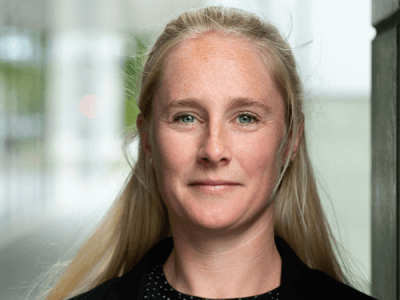
In this latest Meet the Crew, we speak to Debby Weijers, director of Stichting Proefdiervrij, the Dutch society for the replacement of animal testing.
What sparked your personal interest in the topic of animal testing?
“I studied biology at the University of Wageningen. I didn't know much about animal testing, but I was interested in it: what was the role of animal testing in science? What did the law say about it? Part of the course was a guest lecture by Stichting Proefdiervrij, which really struck a chord with me: the strategy was – and still is – a very positive one: Proefdiervrij focuses on possibilities instead of barriers.
Later on, a few years after I graduated, Stichting Proefdiervrij had a vacancy for advisor Science and Innovation. I really like science, but I might just like communications even more, so I applied and started working here. A few years on, our previous director, Marja Zuidgeest, was retiring and she and the rest of the team entrusted me with the position of director. A big step, but with the whole team on board and Marja's work to build on, it was an opportunity I didn't want to miss out on. We still do that guest lecture at Wageningen, by the way!"
Really? Do you notice a change in students' perception or awareness?
"Luckily, more and more students already know about our foundation, when we give the lecture. They are aware of the transition towards animal free innovations. Not all of them, but definitely a bigger group knows about the fact that animal free innovations can be an option if you decide to go for a career in research and the scientific world. Things are changing, but there is definitely still room for improvement."
"I’m really convinced that we can improve science by focusing on animal free innovations."
What sets Stichting Proefdiervrij apart?
“Our final aim is the complete replacement of all animal experiments. Our strategy to make this a reality is mainly focused on a positive view and collaboration. We know we have to work together with scientists, politicians and society to come up with solutions and animal free innovations that are providing better results than the animals experiments do. So in that sense, we're a little bit the odd one out among more traditionally activist organizations. We know we have to work together and we need scientists on board if we want to achieve real results and change the future of science for the better.
This philisophy also shows in the way we communicate. I'm definitely an animal lover, but the biggest reason for me to work for Stichting Proefdiervrij is that I’m really convinced that we can improve science by focusing on animal free innovations. Science without animal testing makes for better science. That's what we focus our messaging to the public on: showing them the amazing things science can do and the innovative alternative technologies that already exist."
What role does Stichting Proefdiervrij play in the VHP consortium?
“Our main focus is on communications. As a foundation, we're a hundred per cent dependent on the contributions of mainly Dutch citizens. That means that explaining to them what we do, why and how is daily business for us. We've learned that communicating about animal-free innovations is a delicate subject, which you have to approach cautiously. We understand the challenges this poses to researchers or business and we've built quite a lot expertise on how to inform the general public. Also, or maybe especially, in a situation where you haven't fully reached your goals yet, and for the time being, you're still partially dependent on animal testing. Our main contribution to VHP4Safety is this know-how of informing citizens in a positive and constructive way."
When is the project a success for you?
“If I focus on the Netherlands specifically, I would want that at least all biomedical students know about the project. If we can achieve that within the project timeframe, it would make a big difference for the future. Students are the next generation of scientists and professionals. They're the ones we need to get on board to make this transition happen. In turn, to create this shift, of course, we need current PI's and researchers to be fully on board too, and accepting a new way of working for the future."
"If there was one consortium or one proposal that really deserved to get the grant, it was definitely this one"
What has struck you recently while working on this issue?
“I've been really astonished by the enthusiasm and how much effort was put into just setting up the consortium to begin with, even the process of carefully crafting the wording of our proposal. I haven't experienced that before. If there was one consortium or one proposal that really deserved to get the grant, it was definitely this one.”
What is the most inspiring piece of news you've seen recently?
“I don’t think it was really news, but a message on LinkedIn. It shows these beautiful images of the human brain with different colors in which you could see the neurons, etc. I was amazed by how beautiful the human body is. These images are so beautiful, but they also show how complex and unique the human brains and bodies are, which to me illustrates the importance of what we're doing in the VHP4Safety project. We can't just 'copy' findings from animal models to the human body. Instead, we have to focus on human models."
← Go back to 'Meet the Crew'